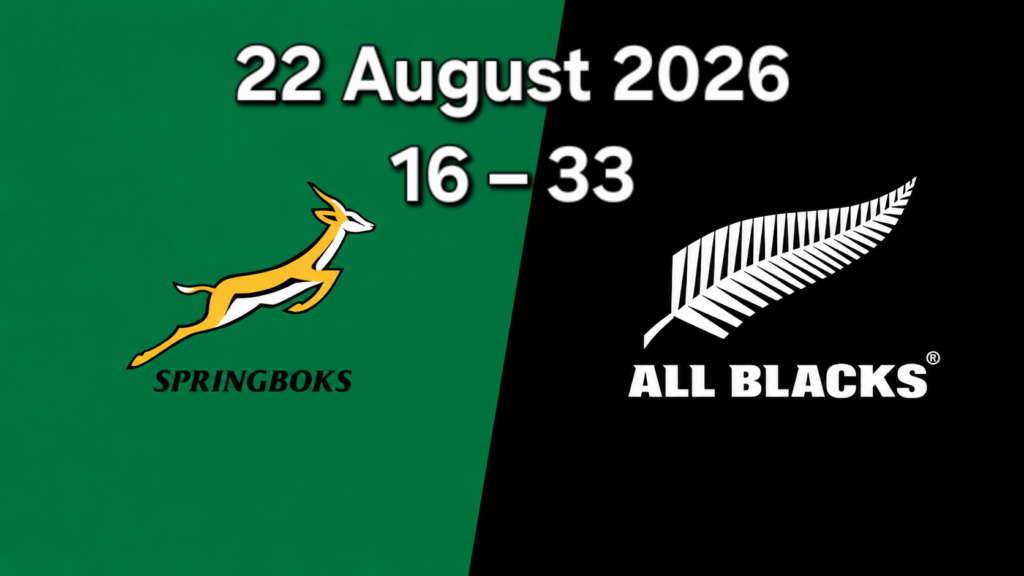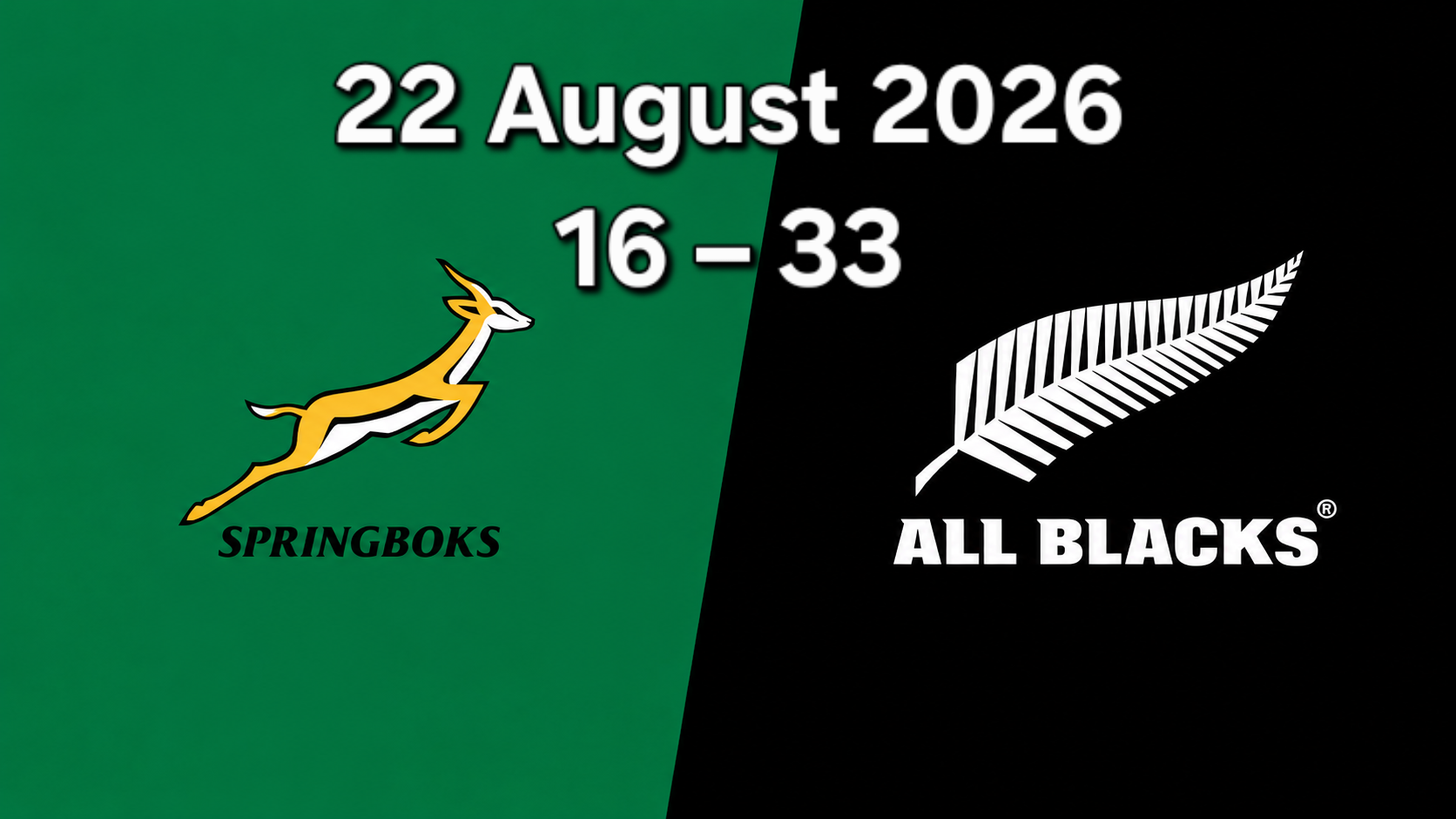

The All Blacks defeated the Springboks by 17 points at Ellis Park in Johannesburg, taking a 1-0 lead in the historic four-Test series. New Zealand scored five tries to South Africa’s one and were the more clinical side throughout the contest.
Match Timeline:
First 20 Minutes – Springboks Start Strong
The Springboks came out with their trademark physicality. They dominated possession, territory and the scrum in the opening stages, putting New Zealand under pressure inside their own half. The crowd at Ellis Park was fully behind the Boks and the early exchanges suggested South Africa might control the game.
However, despite territorial dominance, South Africa struggled to convert pressure into points. Several attacking opportunities broke down through handling errors and missed chances.
Midway Through The First Half – All Blacks Strike
New Zealand weathered the storm and began finding space out wide. Their attack looked sharper and more inventive than the Springboks’. Once they gained possession in attacking areas, they punished South Africa with clinical finishing.
The All Blacks crossed for key first-half tries through their backs and loose forwards, turning limited opportunities into points. Their ability to move the ball quickly exposed gaps in the Bok defence.
Halftime
While the Springboks had enjoyed periods of territorial dominance, the scoreboard favoured New Zealand because they had been far more efficient with ball in hand. South Africa’s kicking game and forward pressure were evident, but attacking creativity was lacking.
Second Half – New Zealand Take Control
The Springboks attempted to increase the intensity after the break and enjoyed several attacking phases deep inside New Zealand territory. The scrum remained a weapon and the forwards continued to compete strongly.
But every time South Africa looked capable of building momentum, mistakes halted their progress. Knock-ons, handling errors and missed opportunities allowed the All Blacks to escape pressure repeatedly.
New Zealand’s attack continued to create problems. Their pace and willingness to spread the ball produced further tries, extending their lead and forcing South Africa to chase the game.
Final Quarter – Game Slips Away
As the clock wound down, the Springboks found themselves needing multiple scores. The pressure increased and discipline became an issue. South Africa received two yellow cards in quick succession, making the comeback task even more difficult.
The All Blacks capitalised, maintaining control and closing out the match professionally. A late Springbok push failed to produce enough points, and New Zealand comfortably finished the stronger side.
Key Reasons The All Blacks Won
Clinical finishing – Five tries from limited opportunities.
Better attacking structure – New Zealand created space and attacked with ambition while South Africa relied heavily on kicking and forward pressure.
Defensive resilience – The All Blacks absorbed sustained Springbok pressure and prevented South Africa from turning territory into points.
Springbok handling errors – Too many promising attacks ended through mistakes.
Discipline late in the match – Two yellow cards effectively ended any realistic chance of a comeback.
Standout Performers
Ardie Savea led the All Blacks superbly and was influential throughout the contest.
Will Jordan was among the try scorers and looked dangerous whenever New Zealand attacked.
Luke Jacobson and Fabian Holland also crossed for important tries.
The All Blacks’ backline consistently created opportunities that the Springboks struggled to contain.
What It Means
This result gives New Zealand a 1-0 lead in the four-Test “Rugby’s Greatest Rivalry” series and represents one of their most impressive performances at Ellis Park in recent years. For the Springboks, the concern will be their inability to convert dominance in certain areas into scoreboard pressure. The next Test now becomes crucial if South Africa wants to level the series.
The scoreline may look heavy, but the game was closer in physical contests than the scoreboard suggests. The difference was that New Zealand were ruthless when opportunities appeared, while South Africa left too many points on the field.