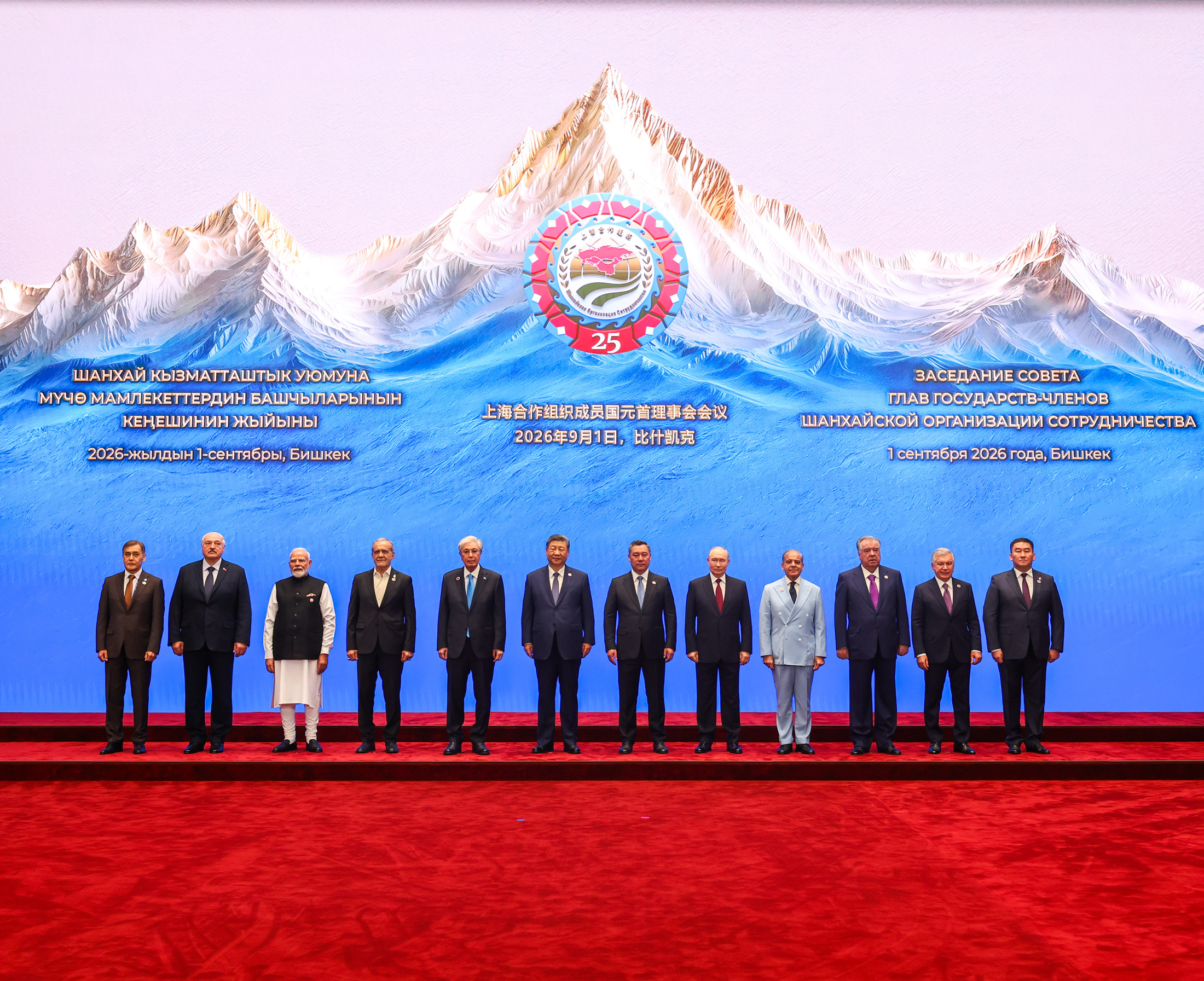
International | World Politics | Shanghai Cooperation Organisation Summit
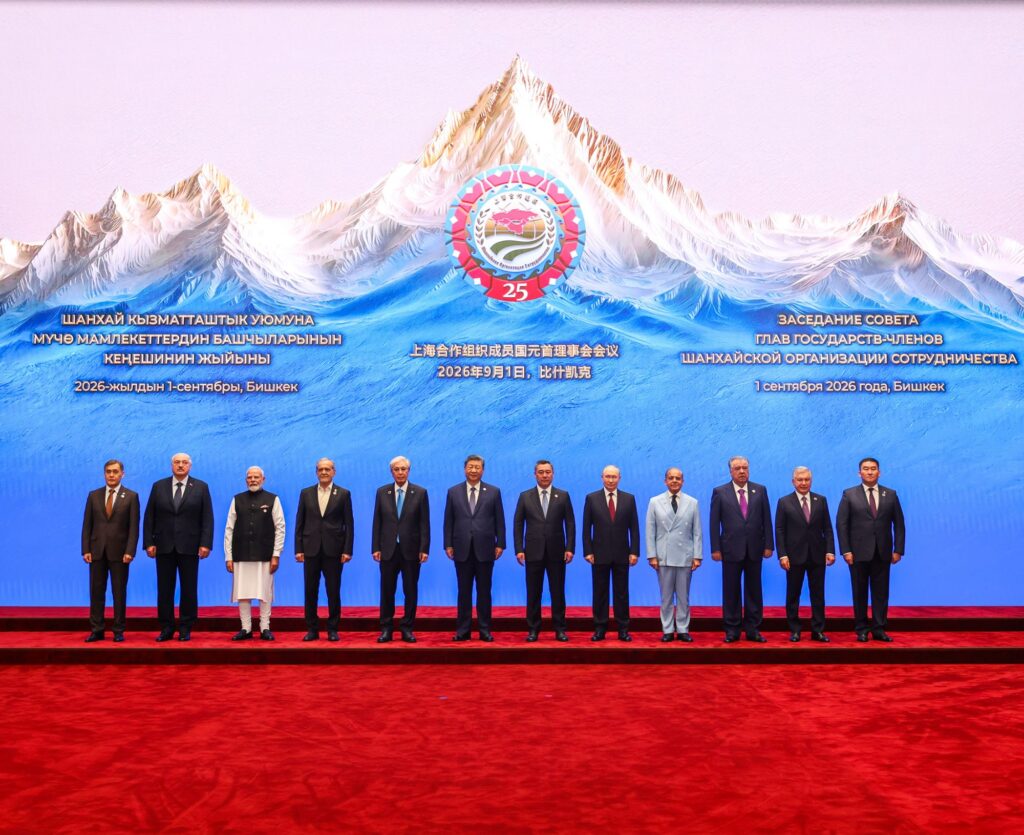
Chinese President Xi Jinping, Indian Prime Minister Narendra Modi and Russian President Vladimir Putin have emerged as the central figures at the 26th Shanghai Cooperation Organisation (SCO) Summit in Bishkek, Kyrgyzstan, where leaders from across Eurasia gathered amid ongoing conflicts in Ukraine and the Middle East, growing tensions between major powers and mounting concerns over global energy security. The summit concluded on 1 September 2026 with member states adopting the Bishkek Declaration, a major joint statement addressing international security, economic cooperation and regional stability. The gathering is being closely watched because it brings together leaders representing nearly half of the world’s population and some of the globe’s most influential political and economic powers.
The Shanghai Cooperation Organisation has grown into one of the world’s largest regional political groupings. Its current members include China, Russia, India, Pakistan, Iran, Belarus, Kazakhstan, Kyrgyzstan, Tajikistan and Uzbekistan. Together, these countries account for approximately 43% of the global population and nearly a quarter of the world’s economic output.
Much of the attention at this year’s summit focused on the interactions between Xi Jinping, Narendra Modi and Vladimir Putin. Images of the three leaders greeting one another and sharing discussions ahead of official proceedings quickly circulated worldwide, highlighting the importance of their relationships in shaping regional diplomacy, trade and security.
Russian President Vladimir Putin used the summit to reinforce Moscow’s partnerships with key Asian powers as Russia continues navigating Western sanctions and the ongoing war in Ukraine. Putin held bilateral talks with both Xi Jinping and Narendra Modi, discussing economic cooperation, trade, energy security and broader geopolitical developments. Russia has increasingly turned toward Asian markets and strategic partnerships as relations with many Western nations remain strained.
Indian Prime Minister Narendra Modi’s meeting with Putin attracted particular attention. According to official statements from New Delhi, the leaders reviewed cooperation across defence, energy, trade, space and people-to-people ties. Modi also reiterated that dialogue and diplomacy remain essential for resolving international conflicts, including those affecting Europe and the Middle East.
China’s President Xi Jinping used the summit to promote what he described as a vision of “universal security” and a more multipolar international order. Xi called for stronger regional cooperation and warned against external interference in the internal affairs of sovereign nations. Beijing continues to view the SCO as an important platform for expanding political and economic cooperation across Eurasia while strengthening its influence within the Global South.
Several of the summit’s most important discussions focused on current global conflicts. The Russia-Ukraine war featured prominently, while the escalating confrontation involving Iran, the United States and Israel also dominated proceedings. The presence of Iranian President Masoud Pezeshkian added additional significance as tensions around the Strait of Hormuz continue affecting energy markets and international shipping.
One of the summit’s most significant outcomes was the adoption of the Bishkek Declaration. SCO leaders collectively condemned military attacks against Iran and criticised sanctions imposed on several member states. The declaration also addressed regional security concerns, economic cooperation and efforts to strengthen political coordination among member countries.
Energy security remained another major topic. Recent instability in the Gulf region and ongoing volatility in oil markets have highlighted the importance of cooperation between major energy producers, consumers and transit states. Several SCO members play crucial roles in global oil, gas and mineral supply chains, making discussions around transport corridors and energy infrastructure particularly important.
Relations between India and China also attracted attention. Although no formal bilateral breakthrough was announced, diplomatic observers noted continued engagement between the two Asian giants following efforts over the past two years to stabilise relations after earlier border tensions. Economic cooperation and regional security remain key issues for both governments.
The summit also highlighted the growing influence of emerging powers in international affairs. While the SCO is not a military alliance, it has increasingly become a forum through which member states coordinate positions on security, trade, infrastructure development and geopolitical issues. Many analysts view the organisation as part of a broader shift toward a more multipolar global order.
Attention is now turning to future diplomatic engagements following the summit. Kremlin officials indicated that discussions are under way regarding a possible meeting involving Vladimir Putin, Xi Jinping and US President Donald Trump at a future international gathering, although no formal arrangements have been confirmed.
As leaders depart Bishkek, the outcomes of the summit are expected to influence discussions on global security, trade, energy policy and international diplomacy in the months ahead. With conflicts continuing in Ukraine and the Middle East and geopolitical competition intensifying, the SCO’s role in shaping regional and global affairs appears set to grow further.