Pretoria | South Africa
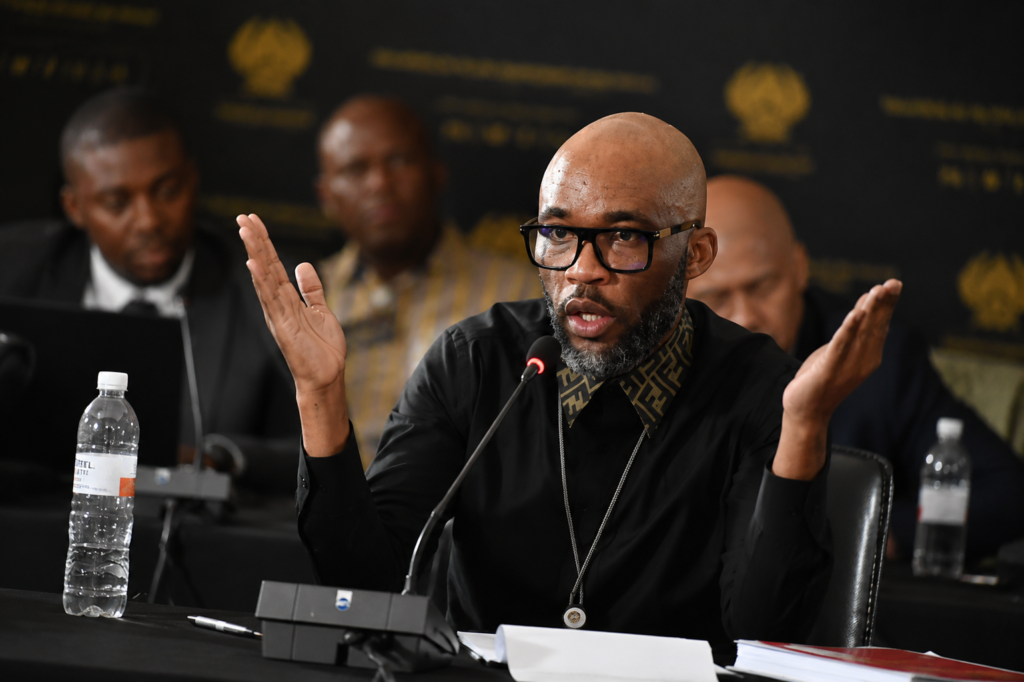
Tenderpreneur Vusimuzi “Cat” Matlala has told the Madlanga Commission of Inquiry that he and controversial businessman Hangwani Morgan Maumela pooled money and shared profits from government tenders for close to a decade, testimony that has opened a direct line between the R228-million SAPS Medicare24 corruption scandal and the R2-billion Tembisa Hospital looting saga.
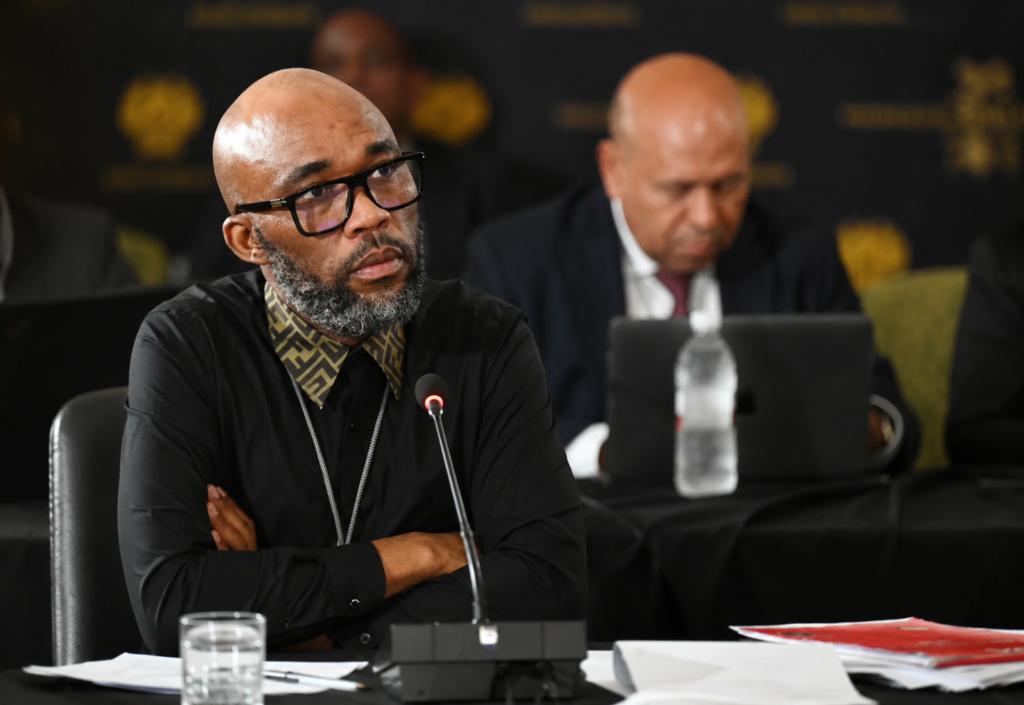
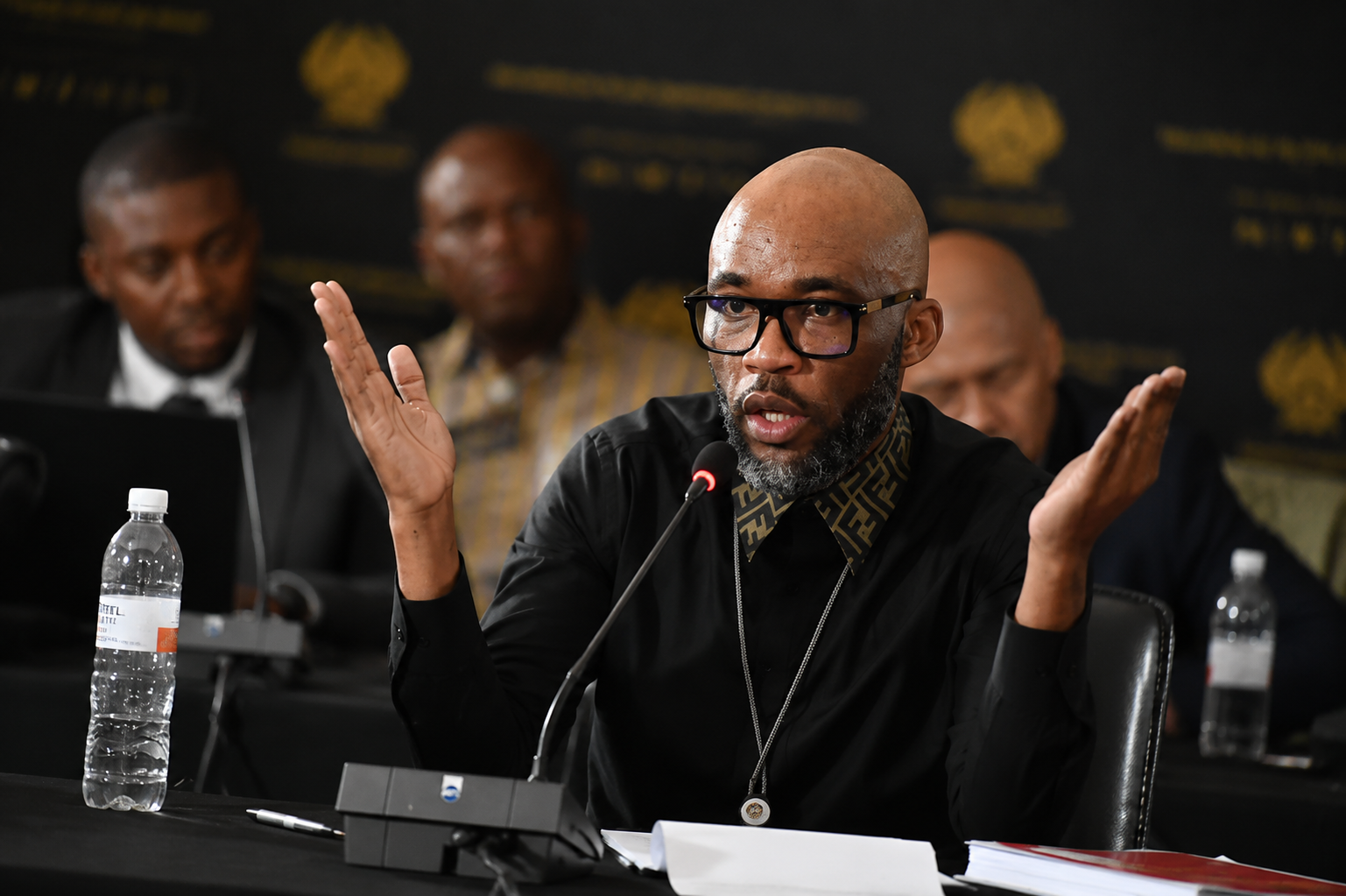
Matlala, testifying under subpoena at the Brigitte Mabandla Justice College in Pretoria, is now in his fourth consecutive day before the commission, which is chaired by Justice Mbuyiseli Madlanga and tasked with probing criminal infiltration, political interference and corruption within South Africa’s police, prosecution and intelligence services. The commission was established by President Cyril Ramaphosa following explosive allegations made on 6 July 2025 by KwaZulu-Natal police commissioner Lieutenant-General Nhlanhla Mkhwanazi, who claimed the country’s criminal justice system had been compromised by organised crime.
On Tuesday, 25 August, evidence leader Advocate Mahlape Sello pressed Matlala for hours over the mechanics of his business relationship with Maumela, a Sandton-based tender tycoon who has been identified by the Special Investigating Unit (SIU) as the central figure behind the so-called “Maumela Syndicate” — one of three coordinated networks blamed for looting more than R2 billion meant for healthcare services at Tembisa Hospital in Ekurhuleni.
Matlala told the commission he first met Maumela around 2015 or 2016 through a shared passion for luxury sports cars, meeting regularly at a restaurant in Sandton. “That’s where we started our relationship because of the love of cars,” he said. By around 2018 to 2019, the friendship had evolved into a business partnership that lasted until roughly 2023. Matlala said the two men invested about R1 million each into a joint account used to fund successful bids for requests for quotations (RFQs), including tenders for medical consumables issued by the Gauteng Department of Health. Whoever secured an RFQ first would draw from the shared account, but was required to pay the other partner 10% of the profit. “He contributed money because there is money that we put in the main supplier account… whoever gets RFQs first, we can take money from there, but he’d have to give me 10% of the profit,” Matlala told the commission. He estimated that their joint successful bids over roughly three years amounted to less than R5 million, though he said the scale of their dealings made it difficult to recall every transaction.
Maumela also served as a director of Matlala’s private security company, Cat VIP Protection, further entrenching the business relationship between the two men.
The SIU’s own investigation has already drawn a formal line between the two men. In its September 2025 interim report on Tembisa Hospital, the SIU said it had reviewed 1,728 procurement bundles worth R816,560,710 linked to the Maumela Syndicate, completing 924 analyses and uncovering significant irregularities. Investigators traced 41 suppliers or service providers connected to Maumela, three of which — worth a combined R13,538,292 — were linked directly to Matlala. A separate High Court order in July 2026 saw the Asset Forfeiture Unit seize R326 million from the Maumela network after investigators found that 14 companies allegedly controlled by the syndicate had unlawfully benefited from hospital contracts worth more than R400 million between January 2019 and August 2022.
The Tembisa Hospital investigation was originally triggered by disclosures from Gauteng Department of Health official Babita Deokaran, who flagged suspicious payments before she was gunned down outside her Winchester Hills home on 23 August 2021 — a murder widely linked to her whistleblowing. The Office of the Premier referred the matter to the SIU the following year, and the unit’s probe has since identified three coordinated syndicates — the Maumela Syndicate, the Mazibuko Syndicate linked to Rudolph Mazibuko, and a third network still under investigation — collectively responsible for siphoning off more than R2 billion.
Maumela, who is related to President Ramaphosa through a previous marriage, has not been criminally charged despite the scale of the allegations against him. Justice and Constitutional Development Minister Mmamoloko Kubayi told Parliament earlier this year that prosecutors were still working to convert SIU evidence into admissible material for a criminal case. The SIU raided Maumela’s Sandhurst home in October 2025, seizing luxury vehicles including three Lamborghinis, and has since pursued civil asset preservation rather than criminal arrest.
At the commission this week, Matlala was also drawn into questions about a disputed R4-million payment trail connected to Maumela and the late alleged “Big Five” cartel boss Jotham “Mswazi” Msibi. Sello confronted Matlala with evidence that he had forwarded proof of a Maumela payment to Msibi and had referenced bank accounts into which Maumela’s money was to be deposited, despite Matlala’s initial claims that he had no knowledge of the transactions. Matlala said he had introduced Msibi — who he said treated him “like a son” — to Maumela, and characterised the R4-million exchange as being made to “my son’s friend.” Matlala also faced questioning about loans of R5 million he received in 2024 from businessman Steve Motsumi, which he said were used to fund renovations on a hospital lease project at the SAPS Pretoria West College and were fully repaid in 2025. He has separately told the commission that he does not know Police Minister Senzo Mchunu and denied any meetings or financial links to him.
Matlala initially tried to avoid answering questions about Maumela altogether, invoking his right against self-incrimination and arguing he could himself be a suspect in the SIU’s Tembisa investigation. Sello rejected the argument, telling the commission the evidence Matlala had submitted did not support that claim and that no SIU investigator had ever approached him in that matter. His legal team, led by Advocate Annalene van den Heever, has repeatedly clashed with evidence leaders over the scope of the questioning, and on Monday, 24 August, threatened to withdraw from the proceedings entirely. Van den Heever has also fought to prevent the commission from accessing an affidavit Matlala submitted as part of a plea and sentencing agreement that later collapsed.
That plea deal saga forms the backdrop to Matlala’s appearance. In June 2026, Matlala pleaded guilty at the Pretoria Specialised Commercial Crimes Court to seven counts of fraud, corruption and money laundering linked to the R360-million SAPS Medicare24 tender, agreeing to a Section 105A plea and sentencing agreement negotiated with the National Prosecuting Authority’s Investigating Directorate Against Corruption (IDAC). Although the tender was advertised at roughly R360 million, Matlala’s company, Medicare24 Tshwane District, was awarded the three-year contract in June 2024 with a winning bid of about R228 million; SAPS had already paid out more than R50 million before the deal was cancelled in May 2025 following an internal audit that flagged serious irregularities. Matlala was one of 17 people originally charged in the case, alongside 12 senior police officers, Medicare24 managing director James Murray, and suspended national police commissioner General Fannie Masemola, who faces separate charges under the Public Finance Management Act for allegedly failing his duties as an accounting officer. Masemola was suspended by President Ramaphosa in April 2026 and remains out on warning.
Under the original agreement, Matlala would have served an effective eight years of a 15-year sentence, with the remaining seven years suspended on condition he testified fully and truthfully against his co-accused, stayed in the country until after 2030, and surrendered his firearm licences. But on 1 July 2026, Magistrate Ignatius du Preez rejected the deal as too lenient, proposing an effective 12-year sentence instead and warning that “these offences were committed out of greed, and for no other reason.” Given until 13 July to accept the harsher terms, Matlala instead chose to withdraw from the agreement altogether. The court declared the plea and sentencing agreement null and void, and the matter was postponed to 11 September 2026 for a full trial. NPA spokesperson Kaizer Kganyago confirmed the collapse meant prosecutors could no longer rely on Matlala’s affidavit or admissions, forcing the state to rebuild its case against Masemola and the other accused from scratch. Matlala now faces trial alongside the police officers and officials he had previously admitted to bribing, including an admission that he paid more than R300,000 in bribes to Brigadier Rachel Matjeng, a police forensic services official who was in a romantic relationship with him and who referred SAPS members to his company.
Separately, Matlala is also standing trial on 25 charges, including 11 counts of attempted murder, over three shooting incidents between August 2022 and January 2024. That trial resumed proceedings in July and August 2026 before Judge Cassim Moosa, who has warned Matlala that a conviction on the attempted murder charges could carry a life sentence. Matlala, a security boss from Mamelodi and owner of Cat VIP Protection Services, is being held as a high-risk inmate at the C-Max section of Kgosi Mampuru II Correctional Centre.
Matlala’s Madlanga Commission testimony has been repeatedly delayed. He first appeared before the commission on 15 July 2026, but his evidence was postponed to 1 September after his legal team argued that testifying ahead of his criminal trial could compromise his right to a fair hearing. The commission later fast-tracked his subpoena, and he returned to the stand on 17 August, only for proceedings to be disrupted by a fire alarm and building evacuation at the Brigitte Mabandla Justice College. His testimony continued on 24 and 25 August and is expected to enter new territory on Wednesday, 26 August, as evidence leaders shift focus to fresh lines of questioning.
The commission’s evidence leaders have argued throughout that the collapse of Matlala’s plea deal is irrelevant to their own mandate, which centres on establishing the extent of criminal infiltration of the state rather than determining guilt in any single criminal case. Matlala’s testimony is expected to continue probing his alleged links to senior police officials, politically connected businessmen and the network of tender fraud that investigators say runs from the SAPS Medicare24 contract through to the Tembisa Hospital scandal.
Nuus Bokkie will continue to follow developments at the Madlanga Commission as Matlala’s testimony continues this week.