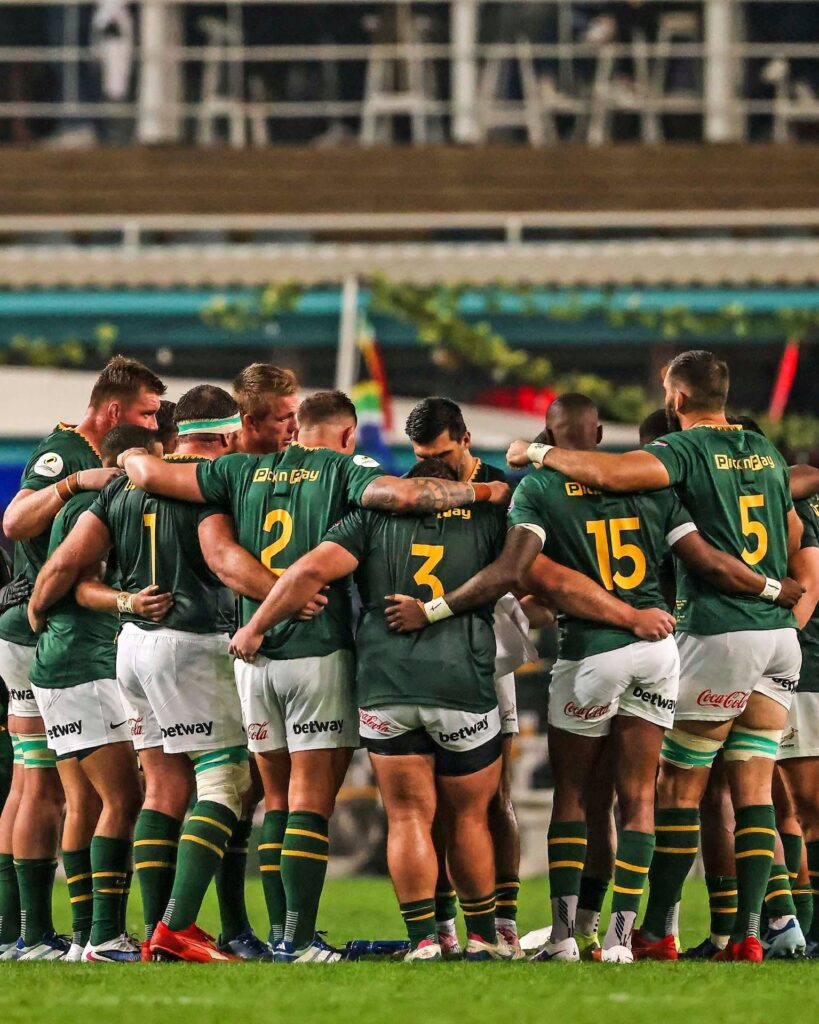
Few sporting rivalries command global attention quite like the clash between the Springboks and the All Blacks, and anticipation is once again reaching fever pitch as South Africa and New Zealand prepare for another chapter in what many consider rugby’s greatest rivalry.
For more than a century, the two rugby giants have set the standard in international rugby, producing iconic moments, legendary players and unforgettable matches that have helped define the sport. Now, with the latest Test series approaching and both nations deep into preparations, excitement continues to grow among supporters, players and rugby analysts around the world.
The rivalry dates back to 1921, when South Africa and New Zealand first met in an official Test series. More than 100 years later, the fixture remains the benchmark of international rugby, with every encounter carrying enormous significance regardless of rankings, form or tournament standings.
What makes the rivalry unique is not only the success of the two nations but also their contrasting rugby philosophies. South Africa has traditionally built its success on physical dominance, forward power, defensive intensity and tactical excellence, while New Zealand has become famous for its attacking flair, speed, skill and ability to create opportunities from seemingly impossible situations.
The result is a contest that consistently produces rugby of the highest quality and intensity.
As preparations intensify for the upcoming series, Springbok coach Rassie Erasmus has already made headlines by recalling veteran forward Deon Fourie to the national squad. Fourie, one of the most experienced forwards in South African rugby, has become a trusted figure within the Springbok setup due to his versatility, leadership and ability to perform under pressure.
The recall has been widely viewed as a strategic move by Erasmus as he looks to balance youth and experience ahead of one of the toughest challenges in world rugby. Fourie’s ability to cover multiple positions in the forward pack could prove valuable against a New Zealand side known for testing opposition squads across all areas of the field.
The Springboks are expected to rely heavily on their experienced core, including captain Siya Kolisi, lock Eben Etzebeth, flyhalf Handré Pollard, wing Cheslin Kolbe, scrumhalf Grant Williams and several other Rugby World Cup-winning stars.
Meanwhile, the All Blacks have already arrived in South Africa as part of what has been branded “Rugby’s Greatest Rivalry” Tour, a promotional and competitive build-up designed to celebrate one of the sport’s most historic contests.
As part of their preparations, the All Blacks are scheduled to face the Sharks in Durban, providing New Zealand’s coaching staff with a valuable opportunity to assess combinations, match fitness and tactical execution before the Test matches against the Springboks later this month.
The fixture against the Sharks is expected to attract significant attention from rugby supporters across South Africa, many eager to get an early glimpse of the All Blacks before the main event begins.
For New Zealand, the tour represents an opportunity to reinforce its status as one of rugby’s dominant nations following a period of transition. While the All Blacks remain among the world’s elite teams, South Africa’s recent Rugby World Cup successes have intensified the competition between the two nations.
The rivalry has entered a fascinating modern era under Erasmus and Siya Kolisi, with the Springboks becoming one of the most consistent and successful teams in world rugby. South Africa’s ability to combine traditional forward power with an increasingly dynamic attacking game has helped establish the team as a genuine force across all aspects of the sport.
Many rugby analysts believe the upcoming Test series could have a significant impact on the international landscape. Victories for either nation would not only boost confidence but could also influence world rankings and set the tone for the remainder of the Rugby Championship season.
Historically, Springboks-All Blacks matches have often been decided by the smallest margins. Some of the greatest moments in rugby history have emerged from encounters between the two sides, including the 1995 Rugby World Cup Final at Ellis Park, dramatic Rugby Championship deciders and memorable Tests played in front of packed stadiums across both countries.
The rivalry has also produced some of rugby’s greatest players. South Africa has contributed legends such as Frik du Preez, Naas Botha, Joost van der Westhuizen, Victor Matfield, Bryan Habana and Siya Kolisi, while New Zealand has produced icons including Colin Meads, Jonah Lomu, Richie McCaw, Dan Carter, Kieran Read and Beauden Barrett.
Their legacies continue to shape the fixture today, with current players fully aware of the history they represent every time they pull on the green-and-gold or black jersey.
Beyond the sporting significance, the rivalry generates enormous economic and commercial value. Matches between South Africa and New Zealand routinely attract some of the largest television audiences in rugby, while stadium attendances, sponsorship opportunities and tourism activity provide major benefits to host cities and rugby organisations.
As the countdown continues, supporters from both countries are preparing for another series that promises intensity, passion and world-class rugby.
Whether played in Durban, Johannesburg, Cape Town, Auckland or Wellington, one thing remains certain: when the Springboks and All Blacks meet, the rugby world stops and watches.
More than a century after it began, the rivalry remains the benchmark against which all others are measured, and the latest chapter looks set to further cement its status as rugby’s biggest attraction.