US President Donald Trump has signed into law a new measure extending duty-free trade preferences for South Africa and other eligible Sub-Saharan African countries under the African Growth and Opportunity Act (AGOA) through to 31 December 2028, offering the continent renewed — if still limited — certainty on access to the American market. The extension falls well short of the 15-year renewal South Africa had been lobbying for, and questions remain over whether the country will retain its AGOA beneficiary status at all once the current authorisation runs out.
The White House confirmed that Trump signed the Continuing Appropriations and Extensions Act, 2027 (H.R. 6500) into law on Wednesday, 2 September 2026. The legislation is primarily a government funding bill, extending federal appropriations through 11 December 2026 to avert a shutdown and give Congress more time to finalise full-year spending bills. Tucked into its provisions, however, is a clause extending “authorities for a broad range of programmes, including surface transportation and veteran programmes” — and, according to the US Congress, “trade preferences for Haiti and certain countries in Sub-Saharan Africa.”
That clause extends AGOA’s duty-free access provisions to 31 December 2028, according to reporting confirmed by Congress. It builds on an earlier reauthorisation Trump signed on 3 February 2026, which restored AGOA through to the end of 2026 with retroactive effect back to 30 September 2025 — the date the programme had lapsed after Congress initially failed to agree on a renewal. That February extension was itself part of a $1.2-trillion spending package used to resolve a partial US government shutdown, and had been trimmed by the Senate to a single year at the Trump administration’s request, at a time when the administration was also linking trade preferences to US access to African critical minerals through its “Project Vault” strategic mineral stockpile initiative.
AGOA was first enacted in 2000 as part of a US strategy to shift its engagement with Sub-Saharan Africa away from traditional aid and emergency relief and towards trade-led economic development and investment. The programme grants eligible countries duty-free access to the US market for more than 1,800 products, on top of more than 5,000 products already covered under the Generalized System of Preferences. It was extended for a full decade in 2015, before lapsing in September 2025 when Congress failed to agree on a renewal in time.
To qualify, countries must show progress towards a market-based economy, respect for the rule of law, political pluralism and due process, and must also work to remove barriers to US trade and investment, combat corruption, reduce poverty and protect internationally recognised human rights, under section 502 of the US Trade Act.
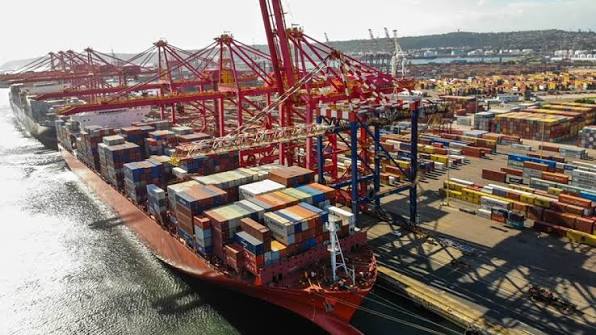
South Africa is one of AGOA’s largest beneficiaries on the continent, accounting for roughly half of the $8.23-billion (about R140-billion) in goods exported under the programme in 2024, according to US International Trade Commission data cited by advisory firm Oxford Economics. Major South African corporate investors in the US, such as Sibanye-Stillwater and Sasol — whose $12.6-billion Lake Charles Chemicals Project in Louisiana is the largest single investment by an African company on US soil — have a direct stake in the trade relationship’s stability.
Earlier in 2026, South Africa’s Department of Trade, Industry and Competition (DTIC) formally submitted a defence of the country’s AGOA eligibility to the office of the US Trade Representative (USTR), despite South Africa’s upper-middle-income classification, and pushed for a 15-year extension. The department argued that short-term renewals and a lack of certainty “harms both South African and US trade and investment and undermines predictability in trade.” Instead, the country has now received a two-year extension — a “win,” but a modest one. A DTIC spokesperson told Business Day the department would issue a formal statement on the extension, but had not done so at the time of publication on Thursday.
Despite the extension, South Africa’s long-term place in AGOA is far from guaranteed. Trump retains the authority to determine AGOA-country eligibility annually, and the USTR formally launched its review for 2027 eligibility in June 2026. The current list of beneficiary countries could still be revised before the next determination takes effect on 1 January 2027.
Oxford Economics warned that the review process “creates an additional source of uncertainty for countries with strained relations with Washington, particularly Nigeria over security concerns, Tanzania over democratic credentials, and South Africa amid a broader deterioration in bilateral relations with the US.” Relations between Pretoria and Washington have been strained for much of 2026, partly over policy differences, though a message from US Secretary of State Marco Rubio in late April 2026 was seen as signalling a possible thaw.
The USTR’s office has separately accused South Africa of maintaining high tariffs on US poultry, wine and spirits while granting preferential access to the European Union, and of imposing what it calls unjustified animal health restrictions on US pork products. South African passenger vehicles, auto parts, steel and aluminium remain subject to a 25% tariff under section 232 of the US Trade Expansion Act, while a further 12.5% section 301 tariff has applied from July 2026 (though products already covered under section 232 are exempt from the additional levy). The impact has already been felt in the automotive sector: vehicle export earnings to the US fell to about R8-billion in 2025, down sharply from roughly R17.7-billion in 2024.
The Motor Industry Staff Association (Misa) welcomed the AGOA extension. Spokesperson Phakamile Hlubi-Majola said the automotive sector — South Africa’s most successful manufacturing industry — is heavily reliant on long-cycle investment, and that continued duty-free access to the US for finished vehicles and components would benefit the industry.
Trade union Solidarity offered more cautious support, pointing to what it called “the ongoing debate in Washington over South Africa’s future eligibility for AGOA,” and warning that exclusion from the programme would be devastating for local industries — particularly the vehicle and agricultural sectors — and could put thousands of specialised jobs at risk. Jaco Kleynhans, Solidarity’s head of public liaison, said the union has been engaging directly with the White House and US Congress, including submitting economic impact studies on the mutual benefits of AGOA, and pledged to “intensify these efforts in the coming days and weeks as the White House finalises the list of eligible countries for 2027.” Solidarity has separately clashed with the South African government over its own advocacy in Washington, including a defamation case it has launched against a minister in the presidency over accusations that it ran a “misinformation campaign” against the country.
While the fresh extension through to 2028 offers South African exporters, manufacturers and investors a measure of near-term relief, analysts caution that the benefits of duty-free access have already been significantly eroded by the separate US tariffs imposed on South African goods over the past year. With the USTR’s 2027 eligibility review still underway and bilateral relations between Pretoria and Washington remaining delicate, South African officials, industry bodies and labour groups alike say the country cannot afford to be complacent about its place in the programme going forward.