Potchefstroom, North West | Education | Higher Education & Healthcare

North-West University (NWU) has achieved a major breakthrough in its long-awaited plan to establish a medical school after receiving accreditation for its Bachelor of Medicine and Bachelor of Surgery (MBChB) programme, bringing the institution a significant step closer to training its first doctors.
The milestone was confirmed after the Higher Education Quality Committee (HEQC) of the Council on Higher Education (CHE) accredited NWU’s MBChB programme, with the confirmation provided in correspondence dated 21 August 2026. The six-year, 940-credit degree will be offered at the university’s Potchefstroom Campus as part of the new Desmond Tutu School of Medicine.
The accreditation marks one of the most significant developments in North West higher education and healthcare training in recent years. Once fully operational, the Desmond Tutu School of Medicine is expected to become South Africa’s 11th medical school and will help address the country’s ongoing shortage of healthcare professionals.
According to NWU, the CHE accreditation confirms that all stipulated requirements for the programme have been met.
The university is now proceeding with the process of registering the qualification with the South African Qualifications Authority (SAQA) on the National Qualifications Framework (NQF).
Professor Binu Luke, the inaugural chief director of the Desmond Tutu School of Medicine, described the accreditation as a major milestone in the establishment of the medical school. The project has involved years of planning, curriculum development, governance structures, staffing plans, infrastructure development and the establishment of clinical training partnerships.
The journey towards establishing a medical school has been years in the making. In December 2023, the university received formal support from then Health Minister Dr Joe Phaahla to proceed with the project, subject to meeting all accreditation and regulatory requirements. Since then, NWU has worked closely with health authorities, regulators and academic experts to develop the programme.
The medical school has been named the Desmond Tutu School of Medicine in honour of the late Archbishop Desmond Tutu, with university leaders saying the institution aims to produce doctors guided by values of compassion, service, justice and integrity.
One of the key goals of the project is to increase the number of medical professionals trained in South Africa. The university has previously indicated that its initial intake is expected to be around 50 students, with plans to gradually expand beyond 100 students as clinical training capacity grows.
Clinical training is expected to be centred around the Klerksdorp/Tshepong Hospital Complex and affiliated hospitals and clinics in the Dr Kenneth Kaunda District, creating new opportunities for healthcare training and research within the province.
Despite the breakthrough, several important steps remain before students can enrol. The next major hurdle is accreditation by the Health Professions Council of South Africa (HPCSA), which is required before graduates can eventually enter professional practice.
NWU has indicated that an HPCSA accreditation visit is planned for February 2027. If successful, student recruitment could begin during 2027, with the first class expected to start studies in January 2028.
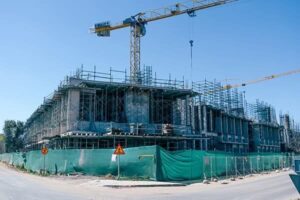
Construction and development work on the new medical school facilities is already progressing on the Potchefstroom Campus.
The university is also finalising key partnerships, including agreements with the University of the Witwatersrand and the National Health Laboratory Service, which will support the academic, clinical and laboratory components of the programme.
The development comes at a time when South Africa continues to face pressure on its healthcare system and a growing demand for doctors, specialists and other healthcare professionals.
Experts have long argued that increasing medical training capacity is critical to improving healthcare access, particularly in underserved communities and rural areas.
For North West Province, the project is expected to deliver long-term benefits through skills development, healthcare research, job creation and improved access to medical training. If timelines remain on track, 2028 could mark the beginning of a new era for healthcare education in the province.